
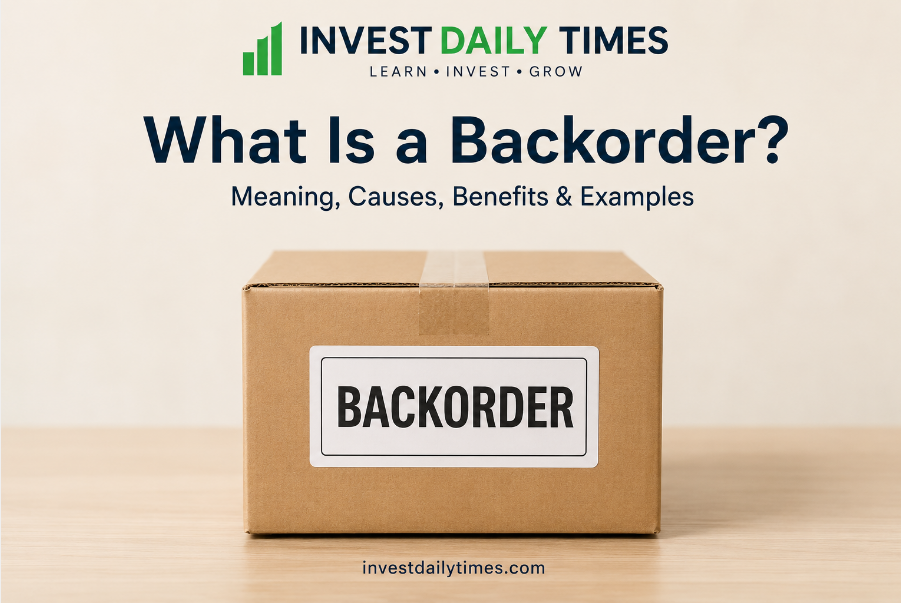
What is a backorder? A backorder is when a customer orders a product that is not available at that time due to a lack of stock, but the seller anticipates that the stock will arrive or be supplied at a later date and fulfil the order. In other words, the product can still be ordered even though it is not ready to be shipped immediately.
Backorders are usually caused by customer demand exceeding the available inventory, but other causes include supplier hold-ups, manufacturing delays, transportation issues, inaccurate inventory records, and lack of safety stock. The key difference is that the customer’s order remains active as the business strives to restock the inventory and deliver it. A backorder is thus most appropriately considered a deferred fulfilment promise in contemporary inventory management, but not merely an out-of-stock/discontinued product.
The best thing for customers, however, is that a backordered product can usually still be ordered. What the seller is actually saying is that we do not have the item to ship today, and we will get more and fulfil your order in the future. The process itself may vary depending on the retailer.
There are those businesses that receive payment once an order has been placed, and others receive payment once the shipment of the product is made or as per the specifications quoted. Similarly, no universal time limit exists which defines the length of time it would take for all backorders to be fulfilled. The waiting period is based on supplier lead time, production capacity and transportation, availability of inventory and the severity of the underlying shortage. A company must hence give a realistic estimate and not suggest that all the backorders will be completed in a given number of days.
How Does a Backorder Work?
The backorder process begins when available inventory is insufficient to fulfill a customer’s order immediately. An online retailer might have sold all its remaining stock of a certain laptop; however, the supplier has assured the retailer that they will deliver another consignment. Rather than taking the laptop off the website, the retailer can still accept orders and specify that the product is backordered.
The customer’s order is then registered as an open or pending fulfilment requirement. The retailer liaises with its supplier or manufacturer to get more units, accept the shipment, adjust its inventory, and assign the new products that are available to those who are waiting. In an inventory or enterprise resource planning system, the order can be attached to the anticipated incoming supply until the shortage is addressed. This enables the business to differentiate inventories that are in stock and those that have already been allocated to the customers.
This process highlights an important distinction between accepting a product order and fulfilling it. A business can take an order that it is not able to deliver upon, but that does not imply that the customer should be provided with an unrealistic delivery time. To manage a backorder, it is necessary to have visibility of incoming inventory, suppliers’ commitments, customer orders and anticipated lead times.
In case replenishment comes in less quantity than is expected, the company might also have to decide how available units will be allocated to waiting orders. Companies with effective backorders management usually integrate inventory monitoring with active communication to customers. Customers are supposed to be aware that something is delayed; they should be aware of the period over which they are supposed to receive the item, and they should be updated in the event there is a change in that time.
Simple Backorder Example
Consider an online electronics retailer that normally keeps 500 units of wireless headphones in its warehouse. A successful promotion suddenly increases demand and the 500 units will be sold out in a couple of days. The retailer has already ordered a replacement from its manufacturer, yet the subsequent delivery will not occur for a few weeks. Instead of ceasing to accept orders, the retailer can enable customers to buy the headphones on backorder.
When a customer makes an order at this point, the customer understands that the product cannot be shipped immediately and will be delivered once new inventory arrives. As soon as the shipment is delivered to the retailer and converted into stock, the business is able to start delivering on those outstanding orders. In the case where the manufacturer supplies only 300 units as opposed to the anticipated 500, the retailer will be left to handle the outstanding orders until more stock is available.
This example points to the fact that what is a backorder is, in principle, a matter of both inventory status and customer commitment. The product is currently out of stock, but the seller believes that it will become available in the future and has held onto the customer’s order instead of it being a missed sale.
It may be advantageous when the demand is high and replenishment is reliable. But when the retailer lacks a trusted way of getting more inventory, it can cause unnecessary waiting and customer dissatisfaction to keep taking orders. A good backorder policy would thus be based on the reality of supply as opposed to just offering a commodity to be bought at any time.
Why Do Backorders Happen?
Backorders normally take place when the stock on hand fails to accommodate customer demand or when replenishment is delayed. Some of the typical reasons include sudden demand surges, supplier issues, manufacturing constraints, shortages of raw materials, transportation delays, inaccurate demand forecasts, inadequate safety stock, and inventory-record errors. Multichannel inventory synchronization can also contribute to backorders. A retailer that sells through multiple websites, marketplaces, stores, or warehouses may accept more orders than it can fulfill if inventory information is not updated accurately across locations.
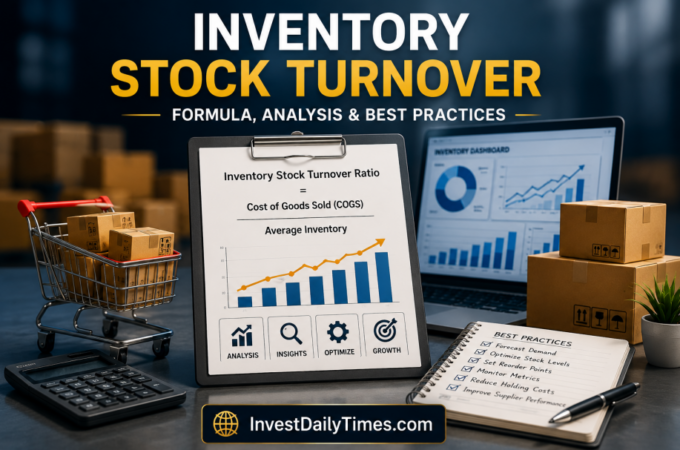
Inventory may also be physically available at another location but still unavailable for a particular customer because of fulfillment or routing restrictions. Consequently, companies need a clear view of both their available stock and incoming supply. Tracking inventory stock turnover can provide another useful measure of how efficiently stock is being sold and replaced, helping businesses make better replenishment and inventory-planning decisions.
A difference between demand- and supply-driven backorders is beneficial to businesses. A backorder can be caused by demand that is, in turn, demand-driven; a product may become suddenly popular, possibly due to a successful marketing campaign, seasonal event, product introduction or some change in consumer preferences. Even with a fairly predictable demand, a supply-driven backorder can arise as a supplier misses a delivery date, a factory faces a manufacturing problem, or there is a disruption in transportation.
Internal planning may be the cause as well. When a business establishes its reorder point at a low level or does not consider the actual supplier lead times, it risks running out of stock before replacement inventory arrives. A backorder cannot, therefore, be necessarily considered a marketing success or operational failure; managers must determine what the cause of the backorder is before making a decision on how to act.
High Customer Demand
One of the simplest ways a product goes into backorder is due to high customer demand. Sales can increase faster than the company expected, causing inventory to run out before it can be replenished. It is common with new electronics released, popular consumer goods, seasonal goods, scarce goods, or products that all of a sudden get attention due to advertising or social media.
A company might have stocked sufficient quantities to meet the normal demand yet still run short when buying habits shift at a fast rate. Backorders in this situation have the potential to be helpful in proving that the real demand in the market is higher than the assumptions which have been made in the past.
But high demand does not necessarily indicate that a company is successful in its effort to control its inventory. When a retailer sells out frequently and customers have to wait a long time, the business could be compromising customer satisfaction simply to retain those orders. Backorder data can still be useful in future demand forecasting.
When the same product is continuously generating more orders than the supply, the purchasing teams may re-evaluate the reorder points, the number of suppliers, safety stock, and anticipated lead times. Stated differently, a backorder may be used as a demand signal. The orders that the business was unable to fill immediately can be used to learn and make better decisions regarding inventory in the future.
Supplier and Manufacturing Delays
Backorders can occur when the purchasing team of a business has not thought about inventory adequately. The issue can be traced further up the supply chain. A manufacturer can face equipment problems, labor constraints, component shortages, or raw-material issues. One of the suppliers can then fail to deliver the goods on time, and the retailer is left without sufficient inventory to meet the orders that are already made.
The same situation may happen with transportation and logistics delays, whereby the products may have already been manufactured but are yet to reach the warehouse where they are required. That is why the lead time of suppliers should be taken into account in inventory planning.
Lead time is the difference between the time when a replenishment process is launched and the time when the inventory is available to be used or sold. When a business considers a supplier to be able to deliver in 20 days, yet the actual lead time is closer to 35 days, the reorder point might be below adequate. Even normal demand will then deplete the leftover stock before the next shipment comes.
To mitigate this risk, businesses can track the performance of their suppliers, make realistic assumptions about lead time, maintain realistic safety stock, and enhance visibility of purchase orders and incoming shipments. External disruptions which lead to backorders cannot always be removed, but with better planning, they can be less frequent and severe.
Backorder vs. Out of Stock: What’s the Difference?
Out of stock and backorder are similar and different inventory statuses. A product that is out of stock is the type of product that cannot be immediately purchased, as the seller does not have sellable inventory at the moment. The product may be temporarily unavailable, awaiting replenishment, seasonal, or discontinued.
A backordered product, though, may still typically be ordered despite the fact that the seller cannot immediately ship it. The customer orders the item knowing that the item will be delivered upon the availability of new stock.
The key distinction is whether the business continues accepting orders against expected future inventory.In the case of a backorder, the customer order will be active until the seller is successful in sourcing more stock. In the case of an out-of-stock product that is considered normal, new orders are usually not accepted until the product becomes in stock again.
Since the terms can be interpreted differently by retailers, customers are advised to verify the availability message and fulfilment policy of a product and then place an order.
Backorder vs. Backlog: What’s the Difference?
A backorder is a particular customer order that is not immediately fulfilled because the required inventory is unavailable.Backlog, on the other hand, is a larger queue of orders, tasks or work that has not been completed. The backlog of a business can be due to a shortage of inventory, insufficient warehouse space, production delays, staffing or any other operation-related issues.
To illustrate, when a retailer gets an order for a laptop but fails to get the laptop, such an order may turn into a backorder. Assuming that the retailer itself has the laptop and the warehouse is not large enough to handle hundreds of orders, the orders that are not fulfilled might constitute a backlog. Generally speaking, a backorder is typically associated with inventory, whereas a backlog may encompass a much broader scope of fulfilment or operational issues.
Backorder vs. Pre-Order: What’s the Difference?
A pre-order and a backorder both allow customers to place an order before immediate shipment, but they apply to different stages of product availability. A pre-order is typically for a new product which is not yet officially released or generally available.
A backorder typically relates to a product that has already been issued, but is currently out of stock due to the exhaustion of current inventory or a delay in its replenishment. To illustrate, when a manufacturer announces a new smartphone and offers customers the option to pre-order it, the pre-orders are usually considered pre-orders. When the smartphone has already been introduced, the retailer sells its existing stock, and customers can still place orders as they await the next shipment, the orders are usually taken as backorders.
In both cases, it should be communicated clearly when they are supposed to be fulfilled, the terms of payment and when the expected delivery period is likely to be postponed.
How Long Does a Backorder Take?
The universal backorder time does not exist and it is applicable to all products or industries. The waiting period will be based on the cause of shortage and the capability of the business to replenish available inventory. A replenishment, when made by a trusted supplier, could require a comparatively short time, whereas a manufacturing issue, a shortage of components, a transport issue, or a sudden surge in demand can significantly increase the waiting time.
The present e-commerce advice is that backorders can be as short as a couple of weeks, or as long as a few months, although this is to be viewed as a rough guide, and not as a certain industry standard. The actual fulfilment time is dependent on several factors.
These involve supplier lead time, production capacity, availability of raw materials, shipping schedules, delays in customs or transportation, receiving time in warehouses, and the number of pending orders. Companies must not offer an exact delivery date when they are not sure that they can back it up. A realistic estimated time is more appropriate than a good-looking promise that will prove to be wrong. In case of any change in the time of arrival, the customers must be informed.
What Is an Indefinite Backorder?
An indefinite backorder happens when a company keeps accepting orders of a product that is out of stock without a good or certain estimate of when the new stock will be received. An indefinite backorder can leave customers waiting indefinitely, unlike a typical backorder where the seller is typically expected to replenish, or at least supply the product on a reasonably predictable schedule.
This can happen due to the continued shortage of suppliers, production issues, component phasing out, transport issues, or uncertainties regarding future production. Indefinite backorders can pose considerable customer-service and inventory-management problems to businesses. Without providing customers with valid updates, they might cancel their orders or demand a refund, or they might lose trust in the brand.
Companies must hence be keen on the information supplied by their suppliers, be frank in disclosing delays and never give an assurance of a confirmable delivery date. A long wait time should be made very clear, and customers must be presented with such clear choices as not waiting further, picking a similar replacement, a partial delivery or a cancellation and refund.
Benefits of Backorders for Businesses
When managed and backed by reliable replenishment, backorders can bring about real benefits. The most apparent advantage is that companies will be able to keep taking customer orders rather than losing all the sales as soon as the inventory runs out until it restocks. This may be particularly beneficial to items that have a high brand loyalty or have a steady replenishment period, where the customer will wait instead of buying an alternative.
Backorders can also be useful in providing informative data about demand. Backorders, as they build up when stock is out of stock, can demonstrate that the past assumptions that the company made regarding the purchasing quantities or demand patterns must be rethought. In this respect, backorders may serve as an extra source of market intelligence. Inventory efficiency is another possible benefit.
The large amounts of all products held in stock may tie up capital and storage and carrying costs. The risk of obsolete, damaged or seasonal products, as well as a business having surplus inventory, is also present when a business has too much stock. A well-planned inventory policy aims to strike the right balance between inventory levels to satisfy customer needs and levels that would result in excess inventory that is not needed.
Nevertheless, companies must not intentionally cause chronic shortages with an aim of minimising inventory expenses. When the wait times are too long, the number of cancellations, loss of customers, refunds and workload before the service may offset the cost of holding less stock.
Lower Inventory and Storage Costs
Inventory has a real economic cost that is in addition to the cost of buying the goods. The overall cost of stock carrying is influenced by warehousing, handling, insurance, tracking, the capital invested in inventory and possible obsolescence.
For this reason, companies attempt to find out the amount of stock they require without over-stocking warehouses with slow-moving goods. One strategy that may enable some businesses to maintain a leaner inventory is a backorder strategy that still enables the business to capture the demand for products whose future supply can be relied upon.
This does not imply that having low inventory is always superior. The ideal level is determined by the variability of demand, reliability of suppliers, product significance, lead time, storage and the impact of stockout. An enterprise that sells essential replacement parts, such as, might require a bigger buffer than a merchant that deals in non-essential items that have numerous alternatives.
Trade-offs are thus involved in effective inventory management. These trade-offs may be helpful in case backorders are understood, and customer expectations are realistic. They turn out to be hazardous when companies utilise them as an alternative to making appropriate forecasts or selling merchandise routinely without a plausible replenishment strategy.
Risks and Disadvantages of Backorders
The primary threat of a backorder is that the customers might not be patient. In case a product cannot be delivered instantly, the consumer will be able to make comparisons with rival stores and might be able to get the same product elsewhere. This is the danger that is especially high when it comes to standardised products that have numerous substitutes. A consumer with a demand for a typical electronic accessory, domestic gadget or equipment can just buy from another vendor whose stock is prepared to deliver.
When there is an increase in the expected backorder period than the initially communicated period, customers might abort their orders, demand refunds, or lose trust in the business. The loss of frequent backorders may also reveal the flaws in inventory planning. An ongoing order quantity with a significant number of outstanding orders can be a sign of an incorrect demand forecast, low safety stock, supplier failure, long lead times, or errors in inventory records.
More work is also done due to backorders. Employees are to monitor waiting orders, organise incoming stock, interact with customers, make partial deliveries when possible, and make sure that the newly obtained stock is distributed properly. The policies of the company and any accounting framework that applies can also determine accounting treatment and how to treat payments.
As an example, AccountingTools observes that customer payments on backordered goods may be considered a liability until the corresponding sale is actually finalised, which explains why companies should implement proper financial processes, as opposed to considering all orders as immediately final sales.
How Backorders Affect Supply and Demand
An imbalance in supply and demand can also present itself as a backorder that is easily noticeable. The more customers who keep on ordering and the inventory is depleted, the greater the immediate demand on the business than can be met by the inventory on hand. The backorder queue size and age may thus give some valuable information regarding the demand-supply gap. On the other hand, a short line cleared in a short period of time can be a transient variation as opposed to a real issue with the operation.
Nevertheless, backorder volume can never be considered in isolation. A big backlog may be a sign of high product demand, but it may also be a sign of poor procurement planning or a supplier that does not deliver on its promise time and again.
Measures that businesses would want to look into include order ageing, the time that your business takes to fulfil orders, the stock levels, the supplier lead time, the rate at which orders are canceled and the accuracy of the inventory you have. ERP and inventory-management systems can be used to monitor open order lines and to tie shortages to anticipated supply. It is aimed at identifying whether there is a commercially appealing demand spurt in the business or an operational bottleneck that needs to be addressed.
How Businesses Can Manage Backorders Effectively
The first step in managing backorders is to implement complete visibility of inventory, though contemporary businesses must also decide which products are to be subject to backordering. The company ought to be aware of the inventory that is physically present, what has already been assigned to outstanding orders, what is in transit and what the suppliers are likely to deliver.
With a good supplier of a product and a valid replacement strategy, backorders are normally easy to handle. Companies must take care not to receive unlimited orders on outdated products or products with very uncertain lead times. Integrating demand forecasting, reorder points, safety-stock policies, supplier monitoring, inventory synchronisation and automated alerts may assist small businesses in minimising unnecessary backorders without compromising realistic fulfilment expectations.
Businesses also need to make a wise decision on the type of products to use in backordering. A possible candidate can be a product that is anticipated to be replenished regularly and has customer loyalty. An out-of-stock product, one of high uncertainty, or that of an untrustworthy supplier can be more appropriately made unavailable than taking orders that cannot be met in a responsible manner.
It is recommended that companies develop internal regulations regarding when a product may be put on backorder, the number of orders that can be received, the method of notifying the customer and the situations to cancel an order or provide an alternative. This transforms backordering into a well-organised inventory-management system rather than a hasty reaction.
Track Backorder Ageing
Businesses also need to track backorder ageing, which is a measure of the time taken by individual customer orders to be fulfilled. The age of each backorder can be used to determine whether delays are short or going to be long-term. It is also useful in assisting businesses to focus on communicating with customers, researching supplier issues, and deciding how to allocate the incoming inventory when supplies are scarce. Increasing numbers of older backorders can be a sign that replenishment plans, supplier lead times or inventory policies should be reviewed.
Keep Customers Updated
Possibly, customer communication is the factor that makes a backorder a delay that can be managed or a severe service failure. On the product page, businesses should make it clear that the item is not available for immediate shipment and provide a realistic estimate of when the order is expected to be fulfilled. Clear delivery expectations can help customers decide whether they are comfortable waiting or would prefer to cancel the order or choose an alternative product. Businesses should also provide timely updates if the expected fulfillment schedule changes, rather than leaving customers to contact support for basic information.
The communication must also be throughout the customer journey. Contradictory information must not be present on the product page, the checkout process, order confirmation, the customer-service team, and shipping notifications. When one page declares that it will deliver in three days, whereas the contractual agreement is supposed to take three weeks, the company has created a trust issue that can be avoided. An effective backorder procedure by professionals thus considers proper communication as fulfilment in itself. The product is not made available just because the order was received; the customer relationship has to be maintained up to the successful delivery of the promised product.
How AI Is Changing Backorder Management
The use of artificial intelligence and predictive analytics is becoming a more and more significant instrument in managing backorders to ensure that a business can recognise a potential inventory shortage and prevent it before it turns into a critical fulfilment issue. Rather than waiting until the stock becomes zero and the orders start piling up, AI-based inventory management can examine past sales, present demand trends, the performance of the suppliers, the lead times, the seasonality, and the quantity of stock and other indicators in the supply chain to decide which products are most likely to get backordered.
This enables businesses to modify reorder points, ratchet up safety stock, contact suppliers sooner or move inventory across locations prior to a shortage impacting customers.
The way businesses handle the already available backorders can also be enhanced by AI. Predictive systems can approximate replenishment schedules, find the longest waiting orders, give precedence to the available inventory, and pinpoint goods where delays by the supplier are becoming a probable event. These tools can assist companies in making quicker purchasing and fulfilment choices and minimise manual tracking when coupled with real-time inventory and order-management information.
The increasing application of AI in inventory management in 2026 demonstrates a larger trend towards predictive backorder management, where companies are hoping to predict shortages and ensure customer satisfaction and more reliable fulfilment than merely responding to an inventory shortage that has already occurred.
Frequently Asked Questions About Backorders
What Does Backorder Mean?
A backorder is when a buyer has placed an order for a product that is not in stock to be immediately met, but the seller anticipates receiving or manufacturing more stock and delivering the product at a later date. That is, the sale will not be finalised until the business is replenished.
Can You Buy an Item That Is on Backorder?
Yes, retailers who accept backorders enable the customer to make an order even when the item is out of stock at that moment. The customer should realise that the product is not going to be shipped at once and must examine the stated fulfilment and payment terms by the seller.
Is a Backorder the Same as Out of Stock?
No. The backordered product may usually be ordered to be delivered at a later date, whereas a regular out-of-stock product is usually not available until it comes back in stock. The particular terminology may differ across businesses.
Is a Backorder the Same as a Pre-Order?
No. A pre-order is usually associated with a product that has not been released or is not available in general. A backorder typically includes an already produced product which is currently out of stock.
How Long Does a Backorder Take?
No standard time. Backorders can take weeks or even months depending on production, supplier lead times, transportation, demand and other conditions in the supply chain.
Why Do Products Go on Backorder?
Unforeseen demand surges, supplier delays, production interruptions, lack of safety stock, inaccurate forecasts, long lead times, transportation issues, and errors in inventory records are some of the common causes.
Are Backorders Good or Bad for a Business?
They can be either. Backorders can save sales and valuable demand data, although long-lasting or high backorders can lead to cancellations, customer dissatisfaction, extra service expenses, and lost business.
Conclusion
The first principle that one can learn about what a backorder is is that a customer has already ordered a product that cannot be delivered at the moment, but the seller anticipates that there will be some later inventory and will follow up on the order. The most prevalent cause of backorders is a short-term imbalance between supply and demand, but supplier delays, production bottlenecks, transportation problems, poor forecasting and inventory inaccuracies can also contribute.
Managing a backorder can save a sale, gather useful demand data, and relieve the strain of holding large inventories. Unmanaged backorders, however, may lead to long queues, cancellations, refunds, customer-service overheads and lost customers. The most effective approach is not to clear all the backorders at all costs.
Rather, companies should find out why shortages happen, keep the correct inventory records, make realistic assumptions about replenishing the inventory, monitor the performance of their suppliers, and tell customers the truth. The promise to fulfil a backorder in the future of a backorder must be a legitimate promise and not a vague promise that is given just in order to ensure that a product will be available whenever one wants to buy it. Backorders can be turned into a manageable aspect of contemporary ecommerce and retail practices instead of a painful experience of customer dissatisfaction when backed by solid inventory prediction, consistent supply-chain synchronisation, and effective customer communication.
We transform intricate inventory, ecommerce and supply-chain challenges into intelligible, practical information at Invest Daily Time. Since we know what a backorder is and how to handle inventory shortages, how to forecast demand and how to make better decisions to improve fulfilment, we want to help businesses and readers make smarter and more informed decisions in today’s quickly changing market today. Keep up with Invest Daily Time on Facebook, Instagram, and Twitter to get more business, ecommerce, inventory, and market insights.
Business & Inventory Disclaimer: This article is intended to be educational and informational in nature and is not business, financial, accounting, legal, supply-chain, or professional advice. By business, product, industry and jurisdiction, inventory conditions, supplier lead times, fulfilment policies, customer rights and backorder practices may be different. Before making an operational or customer-service decision, businesses must check the supplier information, inventory information, terms of the contract and relevant regulations.











Leave a comment