

One of the most crucial elements of a successful movie release is a budget for marketing and advertising. In the very competitive entertainment business of today, making a fantastic movie is insufficient to ensure that viewers will pay attention. Even excellent shows could find it difficult to attract potential viewers without a well-thought-out promotional strategy. Long before the movie opens in theatres or on streaming services, marketing initiatives will start thanks to a well-organised film marketing advertising budget.
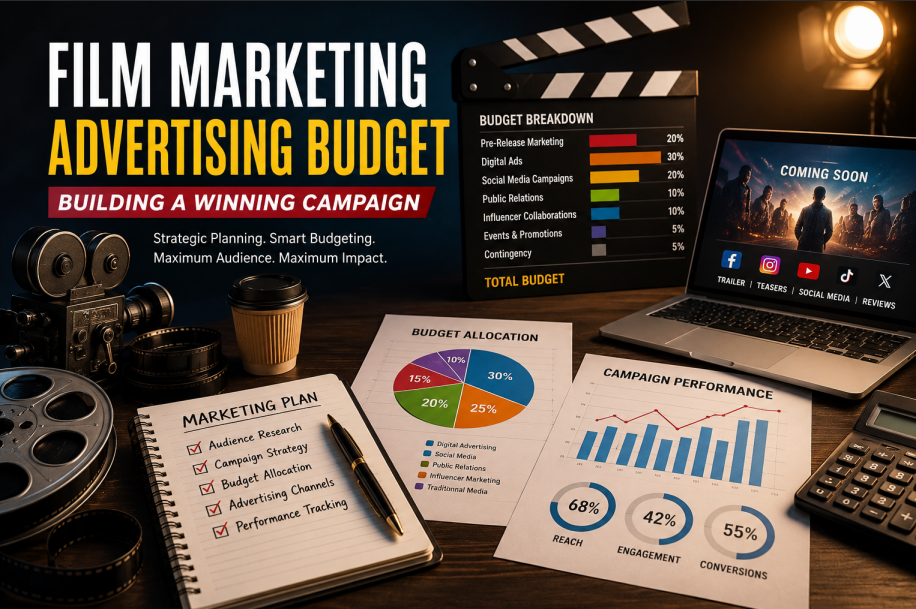
A carefully planned Film Marketing Advertising Budget helps filmmakers allocate resources across multiple promotional channels. Social media campaigns, digital advertising, public relations, trailer distribution, influencer partnerships, and audience engagement programs are a few examples of these. Each of these actions contributes to raising target viewers’ awareness and sparking their interest. Marketing teams can concentrate spending on channels that have the biggest impact when budgets are allocated effectively.
Marketing decisions are increasingly driven by data as streaming platforms, cinemas, and digital media compete for audience attention. A solid film marketing advertising budget allows for flexibility as audience tastes change while supporting quantifiable objectives. In order to boost awareness, draw viewers, and promote long-term campaign success, this article describes how filmmakers can create, oversee, and maximise their budget.
Why a Strong Marketing Plan Matters for Film Success
Every activity included in a film marketing advertising budget has a purpose and structure thanks to a solid marketing plan. Filmmakers can concentrate on particular objectives like raising awareness, creating anticipation, and drawing in the correct audience before to release rather than haphazardly allocating funds across numerous media. A well-defined plan guarantees that every marketing choice advances the film’s overarching goals.
Maintaining audience interest during the campaign is another benefit of effective promotion. Public relations campaigns, influencer partnerships, social media interaction, and trailer releases are all supported by a well-managed film marketing advertising budget. These efforts maintain the movie’s visibility and motivate prospective audiences to follow promotional updates. Ticket sales and streaming performance can be significantly boosted by consistent marketing.
Marketing initiatives may become dispersed and less successful in the absence of a systematic strategy. Target audiences, important messages, preferred advertising platforms, and quantifiable performance metrics are all identified in a successful film marketing advertising budget. Filmmakers can make the most of their budget and transform marketing expenditures into a strategic investment that promotes long-term success by matching promotional activities to audience expectations.
Understanding the Role of a Marketing Advertising Budget in Film Promotion
All of a movie’s promotional efforts are financially supported by the Film Marketing Advertising Budget. Marketing expenses are intended to draw audiences and create interest before to release, in contrast to production budgets, which are concentrated on making the film. Filmmakers can organise their promotional activities strategically and make sure that resources are spent effectively with the aid of a well-structured budget.
Expenses for trailer distribution, paid advertising, social media campaigns, media outreach, influencer collaborations, event appearances, and audience research are usually included in a thorough film marketing advertising budget. All of these initiatives help raise awareness and connect with potential viewers on various channels. Marketing teams may concentrate on channels that provide the best return on investment and audience engagement when funds are allocated effectively.
A Film Marketing Advertising Budget facilitates campaign testing and performance optimisation in addition to financing promotional activities. Marketers are able to evaluate audience reactions, pinpoint effective tactics, and modify expenditures as needed. Throughout the movie’s promotional journey, a well-managed budget helps to retain financial control, increase visibility, and enhance campaign performance.
Setting Realistic Goals Before Creating a Marketing Advertising Budget
Clear objectives should be the first step in any film marketing advertising budget. While some films concentrate on streaming success or festival recognition, others prioritise box office money. Establishing specific goals helps direct all marketing choices from the outset and guarantees that resources are used appropriately.
Additionally, realistic targets enable marketers to efficiently monitor performance and forecast expenses. These objectives could be subscriber growth, website traffic, ticket conversions, audience reach, impressions, and engagement levels. It is simpler to create campaigns that yield quantifiable outcomes when expectations are realistic and well-thought-out.
Setting up key performance metrics is crucial for monitoring achievement. KPIs reveal whether marketing initiatives are effective or require modification. Filmmakers can save wasteful expenses, increase productivity, and produce better overall campaign results by tying each spending choice to certain goals.
Key Factors That Influence Film Marketing Costs
The amount of a film marketing advertising budget depends on a number of elements. Film genre is one of the most crucial since it draws a distinct audience and necessitates a distinctive marketing strategy. Action films, for instance, can demand massive marketing efforts, but niche dramas might need more focused advertising. Budgeting is also greatly impacted by distribution scale, since local releases are significantly less expensive than national or international campaigns that require more media attention.
Because advertising costs differ between areas, platforms, and foreign markets, geographic reach raises costs even more. Because longer marketing periods necessitate ongoing expenditures on advertisements, media, influencer activity, and audience engagement initiatives, campaign longevity is another crucial component. Additionally, when several films vie for viewers’ attention at the same time, competition inside the release window can dramatically increase expenditures.
Filmmakers and marketers can create flexible and realistic budgets by taking these factors into consideration. Industry reports such as those provided by the BFI Industry Data & Insights offer valuable data on audience trends, box office performance, and screen industry analytics that help filmmakers make more informed marketing and distribution budget decisions. It ensures more efficient budgeting and improved campaign outcomes aligned with overall marketing objectives.
How to Build a Marketing Advertising Budget Based on Your Film’s Target Audience
A successful film marketing advertising budget starts with audience research. It assists marketers in identifying their target audience before investing any funds in advertising. Marketers can better understand the target audience by determining demographic traits like age, gender, geography, income level, and lifestyle. Marketing methods are significantly influenced by viewing habits and interests.
diverse platforms elicit diverse responses from different audience groups. While older or professional audiences could favour search marketing, email advertising, television, or traditional media channels, younger viewers might be more interested in short-form video material on social media platforms. Because of this, demographic study is crucial for wise financial management.
Effective utilisation of audience insights improves the accuracy and efficiency of platform selection. Marketers can concentrate on contacting the right people who are most likely to see the movie rather than investing widely to reach everyone. This focused strategy raises overall advertising effectiveness, lowers wasteful spending, and boosts engagement.
Allocating Budget Across Digital, Social Media, and Traditional Advertising
Digital channels are frequently prioritized in modern film marketing budgets because they offer precise targeting and measurable results. Real-time tracking of audience behaviour, engagement, clicks, and conversions is made possible by digital platforms, which facilitate budget optimisation and better outcomes.
An important factor in increasing audience engagement and raising awareness is social media advertising. Platforms like Instagram, TikTok, and Facebook help films reach specific demographics with tailored content. Additionally, search engine marketing increases the likelihood of ticket conversions by attracting visitors who are actively searching for entertainment, reviews, or future releases.
Campaigns are further strengthened by influencer partnerships, which link films to groups that are highly involved and reliable. While outdoor advertising increases awareness in certain areas, traditional channels like television advertising continue to provide good value for exposure to a large audience.
To increase reach, the majority of effective campaigns use many media. This integrated strategy increases audience memory and overall marketing effectiveness while guaranteeing consistent messaging across channels.
Marketing Advertising Budget Strategies for Independent Films
Since independent filmmakers frequently have little funding, efficiency is crucial. The goal of an independent project’s film marketing advertising budget should be to maximise impact while minimising expenses. To guarantee that every expense directly raises audience awareness and engagement, careful planning is necessary.
In independent film marketing, economical promotional strategies are crucial. Through neighbourhood screenings, conversations, and grassroots contact, community involvement fosters the development of devoted audiences. Film festivals are also beneficial since they offer visibility, legitimacy, and chances for critical acclaim without requiring significant promotional expenditures. Filmmakers may regularly promote their work without having to make significant financial investments thanks to organic social media content.
Reach can be further increased at little cost through strategic alliances with local businesses, creators, or small brands. Authenticity is particularly advantageous for independent campaigns since consumers tend to relate more strongly to real storytelling and human interaction. Despite having little budgets, independent filmmakers can compete successfully by focusing on niche audiences and taking use of earned media opportunities like reviews and word-of-mouth.
Selecting the Best Advertising Channels to Increase Reach
The best film marketing advertising budget allocates funds among several channels in accordance with platform strengths and audience behaviour. This well-rounded strategy guarantees that advertising reaches viewers at all phases of their decision-making process, from awareness to conversion.
YouTube campaigns are a great way to provide trailers, behind-the-scenes videos, and cinematic narratives that pique viewers’ interest in a movie. Through short-form videos, reels, and trend-based material that may rapidly expand reach and virality, Instagram and TikTok foster significant visual engagement. Facebook advertising is still helpful for sophisticated audience targeting, enabling marketers to precisely target particular age groups, interests, and geographical areas.
By keeping in touch with interested viewers directly and providing updates, reminders, and special content, email marketing also plays a significant part. Public relations campaigns and media attention also contribute to credibility and third-party validation, which raises visibility and general confidence.
Strategic integration of multiple media produces a more potent and reliable marketing effect than depending just on one platform, improving campaign performance and engagement.
Budget Errors in Marketing and Advertising That Could Impair Campaign Performance
The efficacy of a film marketing advertising budget might be considerably diminished by common errors. Poor audience targeting is one of the most common mistakes, which frequently leads to low interaction and wasted impressions since the content is presented to individuals who aren’t interested in the movie. Overspending on a single channel is another problem since it limits flexibility and the capacity to modify ads in response to performance.
Ignoring analytics is also a big mistake since it keeps marketers from knowing what is effective and what needs to be improved. Budgets are frequently spent inefficiently when decisions are not based on data. Even when targeting is correct, poor or unattractive creative assets might further lower audience interest because the message doesn’t grab their attention.
Additionally, campaign growth and optimisation prospects may be limited if various messages, formats, and audience segments are not tested. Campaigns are continuously monitored and adjusted to prevent these issues, enhance performance, and guarantee a higher return on investment for all marketing initiatives.
Assessing Campaign Effectiveness and ROI
Any film marketing advertising budget must include proper performance measurement to determine whether marketing efforts are delivering real and measurable outcomes. Without accurate tracking, it becomes difficult to identify which strategies are effective and which are wasting resources.
Key performance indicators such as cost per acquisition, engagement rates, conversion metrics, revenue impact, and audience retention should be closely monitored. These metrics provide a clear understanding of how audiences are responding to different marketing channels and campaigns. For example, high engagement combined with low conversions may indicate unclear messaging or weak calls to action.
Performance analysis helps improve future budget decisions by highlighting which strategies deliver the strongest results. By identifying high-performing campaigns, filmmakers can reallocate resources more efficiently and eliminate ineffective efforts. Regular evaluation also supports continuous optimization, ensuring marketing activities remain effective throughout the campaign lifecycle.
Tools like the Google Analytics Help Center provide guidance on tracking user behavior, measuring conversions, and analyzing campaign performance effectively.
Ultimately, consistent measurement allows filmmakers to maximize marketing efficiency, improve campaign outcomes, and achieve stronger financial and audience results.
How Effective Film Studios Handle Their Budget for Marketing and Advertising
Instead of viewing the Film Marketing Advertising Budget as a fixed expense, successful studios view it as a dynamic strategic asset. Rather than establishing a strict plan at the outset and blindly adhering to it, they constantly improve their tactics in response to audience feedback and data. In order to identify various viewing groups and craft messages that appeal to each section, audience segmentation is essential. Decision-making is further guided by market research and data analytics, which show trends, preferences, and campaign performance patterns.
Throughout the course of a campaign, ongoing optimisation guarantees that marketing initiatives continue to be effective and efficient. In order to reinforce messaging, multi-channel campaigns are frequently employed, enabling viewers to interact with the movie through a variety of touchpoints, including internet platforms, social media, and conventional media. In real time, studios keep a close eye on performance and provide funds to the best-performing channels. This methodical, data-driven approach boosts audience engagement, increases budget efficiency, and greatly raises the probability of reaching total revenue and promotional objectives.
Future Developments Influencing 2026 and Later Film Marketing Campaigns
Artificial intelligence, personalisation, advanced analytics, and creator-driven ecosystems will all play a bigger role in shaping the future of the film marketing advertising budget. Marketers will be able to improve audience targeting, automate campaign optimisation, and more accurately forecast performance outcomes thanks to AI-powered solutions. By concentrating resources on high-impact tactics, this will help cut down on wasteful spending and increase return on investment.
Additionally, personalisation will be far more important, allowing filmmakers to target various audience segments with messages based on their viewing habits, tastes, and behaviour. Marketing initiatives will become more tailored and pertinent in place of large-scale campaigns, increasing engagement and conversion rates. Real-time audience interaction, immersive content experiences, and interactive video formats will all improve the promotion and consumption of films.
At the same time, partnerships with influencers and digital producers will become more significant as viewers favour genuine voices over conventional advertising. In general, quantifiable engagement, data-driven decision-making, and significant audience experiences will be given more weight in future marketing budgets than just exposure or reach.
About Invest Daily Times
At Invest Daily Times, we provide practical insights, strategies, and industry knowledge related to marketing, finance, and investment planning. Our content helps readers understand complex budgeting systems and apply them in real-world scenarios, especially in film marketing, business growth, and digital advertising.
Within our platform, the budgeting category focuses on structured financial planning, covering key areas such as budget allocation, cost optimization, and performance tracking. It helps marketers and investors make more informed financial decisions and better understand how budgets work across different campaigns.
For more detailed insights on budgeting and financial planning topics, visit our Budgeting Category.
FAQs
1. What is the biggest mistake filmmakers make when creating a film marketing advertising budget?
One of the biggest mistakes is allocating most of the budget to a single advertising channel without testing audience response. A diversified approach often provides better reach, engagement, and overall campaign performance.
2. Should independent films and studio films use the same marketing budget strategy?
No. Independent films usually benefit from highly targeted and community-driven marketing, while studio films often require broader multi-channel campaigns designed to reach mass audiences across multiple regions.
3. How can filmmakers determine whether their marketing budget is being spent effectively?
Effectiveness can be measured by tracking key performance indicators such as audience engagement, trailer views, website traffic, ticket sales, streaming conversions, and overall return on investment.
4. Why is audience research important before allocating a marketing advertising budget?
Audience research helps identify where potential viewers spend their time, what type of content they engage with, and which platforms are most likely to generate interest in the film, reducing unnecessary marketing expenses.
5. How can a film marketing advertising budget adapt to changing audience behavior?
Modern marketing budgets should remain flexible. By monitoring campaign data and audience interactions in real time, marketers can shift resources toward higher-performing channels and improve campaign results throughout the promotion period.
Conclusion
A film marketing advertising budget is much more than just a financial document; it’s a strategic road map that directs how filmmakers market their work, connect with viewers, and generate money. It guarantees that every spending choice supports a distinct marketing goal and gives promotional activities structure.
Filmmakers can manage resources more wisely by establishing clear goals, comprehending audience behaviour, and determining the most efficient routes. With careful planning, money can be allocated to projects that have the biggest impact, such media outreach, audience engagement programs, or digital campaigns.
As it enables marketers to assess what is effective and what requires improvement, consistent performance assessment is equally crucial. Throughout the campaign lifecycle, this continuous analysis facilitates improved decision-making and continued optimisation.
Careful budget preparation is still essential to marketing success, regardless of whether the movie is an independent production or a big studio release. It increases visibility, audience engagement, and total return on investment in addition to increasing efficiency.
Explore more finance, investment, crypto, and business insights at Invest Daily Times. visit our homepage for the latest updates and opportunities.













Leave a comment